
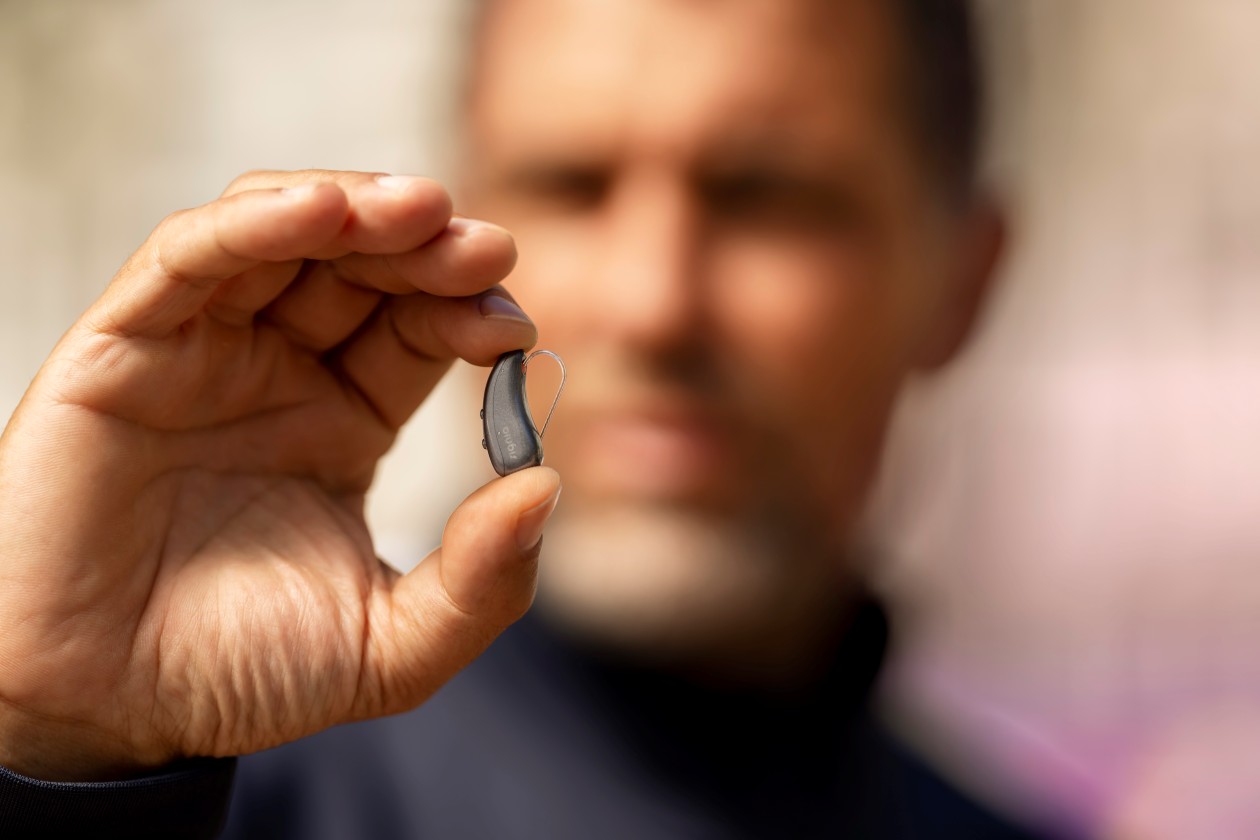
Hearing loss often develops so gradually that it’s easy to put it off. Maybe you’re turning the TV up a little louder or asking people to repeat themselves more often. Even with these small changes, you can still hear. Do you really need hearing aids yet?
This thought process is common. In fact, a longitudinal study of older adults found that people waited an average of 8.9 years between becoming candidates for hearing aids and actually getting them.¹
While deciding when to get hearing aids is a personal decision best made with an audiologist’s help, there are advantages to investing in hearing aids sooner rather than waiting until the hearing loss progresses.
In this post, our Markham audiologists explain the benefits of addressing hearing loss early, discuss how to know when you may be ready for hearing aids, and answer some common questions.
Can Hearing Loss Be Reversed?
Whether hearing loss can be reversed depends on the type and cause. Some forms of conductive hearing loss may be temporary and treatable. For example, hearing loss caused by impacted earwax often improves when the blockage is professionally removed.
Sensorineural hearing loss is different. This type of hearing loss, which includes age-related and noise-induced hearing loss, occurs when the inner ear (cochlea) or auditory nerve is damaged. Once the inner ear cells are damaged, they don’t regenerate, so the resulting hearing loss typically cannot be reversed.
Hearing aids don’t repair the damaged structure or restore your natural hearing. Instead, they amplify and process sound to make speech and other important noises easier to hear and understand.
Because sensorineural hearing loss won’t disappear on its own, there is no advantage to waiting for it to become more severe before looking into hearing aids.
When are Hearing Aids Necessary?
It may be time to consider hearing aids if hearing loss interferes with your everyday communication or you feel like you’re working harder to hear.
Common signs you could benefit from hearing aids include:
- Frequently asking people to repeat themselves.
- Feeling like everyone is mumbling.
- Turning up the TV or radio louder than others prefer.
- Struggling to understand speech when there’s background noise.
- Having difficulty hearing on the phone.
- Missing parts of conversations.
- Finding group conversations hard to follow.
- Difficulty hearing high-pitched sounds.
- Tinnitus (ringing in the ears).
- Feeling unusually tired after meetings, gatherings, or other listening-intensive situations.
- Relying more heavily on facial expressions and lip movements to understand people.
- Avoiding situations because you’re worried you won’t be able to hear.
A comprehensive hearing assessment can tell you whether you have hearing loss, what type and degree it is, and whether hearing aids or other treatments would be appropriate.
What level of hearing loss requires a hearing aid?
When deciding when to get hearing aids, keep in mind that there isn’t a single point at which everyone should get them. Hearing loss is commonly described as mild, moderate, severe, or profound based on hearing test results. But an audiogram is only one part of the equation.
Research on mild sensorineural hearing loss has highlighted the limitations of making hearing aid recommendations based solely on pure-tone averages.²
At Archer Hearing Centre, our audiologists also consider factors such as:
- The frequencies affected by your hearing loss.
- How well you understand speech.
- Whether one or both ears are affected.
- How much difficulty you have hearing in background noise.
- The communication demands of your work and daily life.
- How much your hearing difficulties affect you.
Even if you think a change in your hearing doesn’t meet the threshold for needing hearing aids, your lifestyle and needs could mean you would still get considerable value from the devices.
Is it Better to Get Hearing Aids Early?
Patients sometimes ask, “Is it better to get hearing aids early or should I wait until my hearing loss gets worse?” For someone who is a good candidate, getting hearing aids earlier can mean spending less time struggling with the effects of untreated hearing loss.
Even mild hearing loss can create communication difficulties. Research on early intervention has found that people with slight-to-mild sensorineural hearing loss can experience problems despite hearing thresholds that would traditionally be considered close to normal.²
There are a number of advantages to addressing hearing loss sooner.
Getting hearing aids early can:
1. Make Everyday Communication Easier
With early hearing loss, certain speech sounds are harder to hear, especially in challenging listening environments. You might notice conversations in restaurants are exhausting or miss parts of what your loved ones say.
Hearing aids give you greater access to sounds that have become difficult to hear. This can make it easier to participate in conversations instead of constantly guessing, relying on context to fill in the gaps, or asking others to repeat themselves.
Evidence supports quality-of-life benefits, too. A systematic review conducted by an American Academy of Audiology task force concluded that hearing aids improve health-related quality of life in adults with sensorineural hearing loss by reducing its psychological, social, and emotional effects.³
An earlier randomized trial also found improvements in communication, as well as social and emotional function, among older adults who received hearing aids compared with those placed on a waiting list.⁴
2. Give Your Brain Continued Access to Sound
Your ears detect sound, but your brain interprets it. With hearing loss, the auditory system receives less information. Over time, this reduced stimulation, sometimes called auditory deprivation, may contribute to changes in how efficiently the brain processes sound.
This is one reason audiologists don’t recommend waiting until hearing loss becomes severe before considering hearing aids. The devices can restore access to sounds that have become harder to hear, helping keep the auditory system engaged.
That doesn’t mean someone who has lived with hearing loss for a long time can’t benefit from hearing aids. They absolutely can, but addressing hearing loss earlier often makes adapting to hearing aids easier, which brings us to our next point.
3. Potentially Make Adjusting to Hearing Aids Easier
Getting hearing aids isn’t like putting on a pair of glasses and instantly experiencing the world as you remember it. When you begin wearing hearing aids, everyday sounds you haven’t heard clearly in a while suddenly become more noticeable. Your footsteps, running water, silverware clinking against a plate, birds outside, or even your own voice might sound different at first.
It takes time for your brain to acclimate to receiving this additional auditory information and determining which sounds need your attention. Getting hearing aids when your hearing loss is less advanced can make it easier to adapt because you haven’t been without access to certain sounds for as long.
That said, the amount of time it takes to adjust varies from person to person, and people who have had hearing loss for years can still become successful hearing aid users.²
4. Could Support Cognitive Health
Even mild hearing loss has been linked to an increased risk of cognitive decline and dementia. While scientists are still investigating the correlation, emerging evidence suggests treating hearing loss may help protect cognitive health.
In the landmark ACHIEVE trial, researchers studied nearly 1,000 adults aged 70 to 84 with untreated hearing loss. Among participants with an increased risk for cognitive decline who were given hearing aids, cognitive decline slowed by 48% over three years compared to the control group.⁵ However, the intervention didn’t significantly impact cognitive changes in those with a low risk of cognitive decline.
Another randomized trial found that older adults who received hearing aids showed improved cognitive function compared to the group placed on a waiting list.⁴
Although hearing aids haven’t been proven to prevent or slow dementia, these findings suggest that treating hearing loss may have cognitive benefits. For more information on the research, read our article on the connection between hearing loss and dementia.
5. Address Hearing Loss Before It Has a Bigger Impact on Your Life
The effects of untreated hearing loss go beyond your ability to hear sounds. When it’s hard to follow conversations, people sometimes start to avoid restaurants, parties, and social situations. Communication can become frustrating for the person with hearing loss and the people around them.
Research has associated untreated hearing loss with social isolation and higher rates of depression and anxiety.² While these associations don’t mean hearing loss inevitably causes these outcomes, they do demonstrate why hearing changes are worth addressing instead of dismissing as an inconvenience.
Do Hearing Aids Slow Hearing Loss?
One question we get a lot is: Can hearing aids prevent further hearing loss or slow its progression? Unfortunately, no. Hearing aids treat the effects of hearing loss, but they don’t stop the underlying damage that caused it. In other words, wearing hearing aids doesn’t prevent age-related hearing changes from continuing or fix damage from previous noise exposure.
Protecting the hearing you have means addressing preventable factors. This includes wearing hearing protection around loud equipment or at concerts, keeping personal listening devices at safe volumes, and avoiding prolonged exposure to excessive noise.
Hearing aids improve your ability to hear sounds, including speech and environmental sounds that would otherwise be difficult to detect. While research has been focused on whether this might help limit the effects of auditory deprivation, that’s different from saying the devices stop hearing loss from progressing.
Your hearing can continue to change over time, which is why regular hearing assessments are important. If your hearing changes, your audiologist can program your hearing aids accordingly.
When to Get Hearing Aids: The Bottom Line
While everyone is different, if a comprehensive hearing assessment shows you have hearing loss that could benefit from amplification and it is starting to affect your daily life, it may be the right time to get hearing aids.
Research shows that people often wait years after becoming hearing-aid candidates before wearing them.¹ Starting earlier gives you the opportunity to address any difficulties before you’ve spent years straining to hear, missing parts of conversations, or altering your activities to accommodate your hearing.
If you’ve noticed changes in your hearing, start with a hearing test. At Archer Hearing Centre, our Markham audiologists can assess your hearing, explain your results, and help you determine whether hearing aids are appropriate for you now or whether monitoring your hearing makes more sense.
If you do need hearing aids, the good news is today’s devices are smaller, more discreet, and more comfortable than ever––and they’re fitted and programmed specifically for you. They can also include features such as rechargeable batteries, Bluetooth connectivity, speech enhancement, and background noise reduction.
With so many styles and technologies available, our audiologists are here to help you find hearing aids that suit your needs, listening environments, lifestyle, and budget.
Ready to take the first step toward better hearing? Book a hearing test at Archer Hearing Centre today.
Sources:
- Simpson, A. N., Matthews, L. J., Cassarly, C., & Dubno, J. R. (2019). Time from hearing aid candidacy to hearing aid adoption: A longitudinal cohort study. Ear and Hearing, 40(3), 468–476. https://doi.org/10.1097/AUD.0000000000000641
- Johnson, C. E. (2018). The early intervention of hearing loss in adults. Seminars in Hearing, 39(2), 115–122. https://doi.org/10.1055/s-0038-1642616
- Chisolm, T. H., Johnson, C. E., Danhauer, J. L., Portz, L. J., Abrams, H. B., Lesner, S., McCarthy, P. A., & Newman, C. W. (2007). A systematic review of health-related quality of life and hearing aids: Final report of the American Academy of Audiology Task Force on the health-related quality of life benefits of amplification in adults. Journal of the American Academy of Audiology, 18(2), 151–183. https://doi.org/10.3766/jaaa.18.2.7
- Mulrow, C. D., Aguilar, C., Endicott, J. E., Tuley, M. R., Velez, R., Charlip, W. S., Rhodes, M. C., Hill, J. A., & DeNino, L. A. (1990). Quality-of-life changes and hearing impairment. A randomized trial. Annals of Internal Medicine, 113(3), 188–194. https://doi.org/10.7326/0003-4819-113-3-188
- Lin, F. R., Pike, J. R., Albert, M. S., et al. (2023). Hearing intervention versus health education control to reduce cognitive decline in older adults with hearing loss in the USA (ACHIEVE): A multicentre, randomised controlled trial. The Lancet, 402(10404), 786–797. https://pubmed.ncbi.nlm.nih.gov/37478886/


